
Yarsagumba grades explained: how to compare lots
“A grade”, “A+”, “premium”, “super”: there is no official standard behind any of these names, and every seller uses them differently. What you can compare are the things graders actually look at. Here they are, in the order that matters most for price.
1. Piece count: the main grade
Wild Yarsagumba is graded first by size, written as the number of pieces in a fixed weight: per 10 g, per kilogram, or per tael (37.5 g) in Hong Kong and Chinese shops. The fewer pieces in the weight, the bigger each piece is, and the higher the price per gram.
So two offers both called “A grade” can be very different products. Ask for the piece count and compare that, not the grade name. A seller who will not count the lot for you is a seller to be careful with.
2. Whole pieces, stalk attached
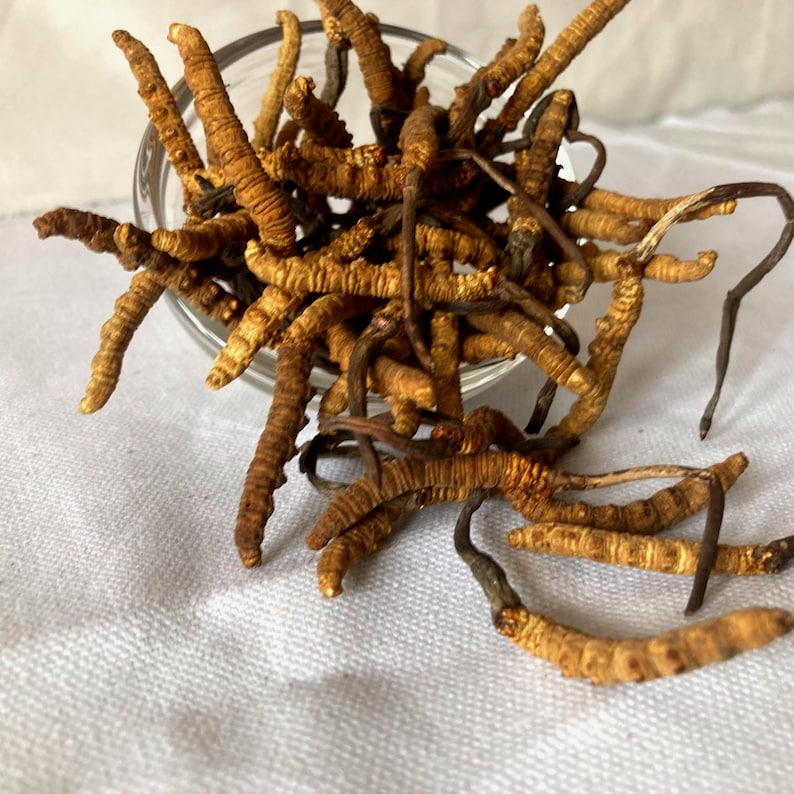
A whole piece is the dried caterpillar body with the dark fungal stalk (stroma) still joined at the head. Top grades are whole pieces only. Lower grades and cheap mixes contain broken bodies, loose stalks, or bodies whose stalk has snapped off. Broken material is real Yarsagumba and is fine for soup or powder, but it should be sold, and priced, as broken.
3. Colour and shape
Good pieces have a golden to yellow-brown body with clear ring segments and eight pairs of small legs visible on the underside, and a dark stalk. Very dark, blotchy or shrivelled bodies usually mean old stock or poor drying. Our authenticity guide covers the checks that separate real pieces from fakes.
4. Cleaning and dryness
Pieces come out of the ground covered in soil, which is cleaned off with a brush by hand. Left on, soil adds weight you pay for. Pieces also need to be fully dried: they should be firm and snap cleanly. A piece that bends is still holding water, which adds weight and can lead to mould.
5. Harvest year
Yarsagumba is picked from about May to July. Properly stored, it keeps well for about a year (see our storage guide), but current-season pieces are worth more than old stock. Ask which harvest a lot is from.
How we grade
We keep it simple. We sell one grade of whole pieces, A+: whole and undamaged, stalk attached, cleaned, fully dried, from the current harvest, graded by hand in Kathmandu. Our Athlete 50 g pack is the same material with the larger, evenly sized pieces picked out. We do not mix grades or add broken pieces to an A+ order.
Before you pay, we will tell you the piece count of the lot in stock and send photos of it on a scale. Ask us on WhatsApp. To see what sets the price per gram, read why Yarsagumba prices change.
Questions buyers ask
- What does A+ grade Yarsagumba mean?
- There is no official international grading standard, so each seller defines its grades. At Yarsa-Gumba, A+ means whole, undamaged pieces with the stalk attached, cleaned and fully dried, from the current harvest. Ask any seller what their grade name means and how many pieces are in the weight you are buying.
- Are bigger Yarsagumba pieces better?
- Bigger pieces cost more per gram because they are rarer, and they are easier to check by eye. Size is a market grade, not a measure of strength; there is no good evidence that a large piece is more potent gram for gram than a smaller whole piece.
- How many Yarsagumba pieces are in 10 grams?
- It depends on the lot, because piece size varies from harvest to harvest. We count every lot and will tell you the number of pieces in your order, with photos on a scale, before you pay.