
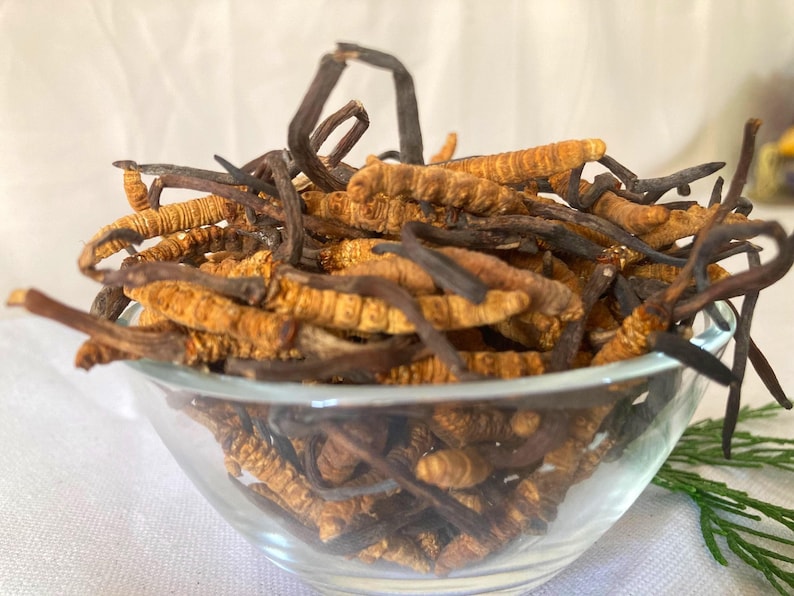
Why Yarsagumba prices change, and how to compare them
Two sellers can quote very different prices for something both call Yarsagumba, and both can be honest. The price of wild Cordyceps sinensis depends on the season's harvest, the size of the pieces, how dry and whole they are, and which unit the price is quoted in. Here is what moves the price, and how to compare offers like with like.
What we charge today
We sell one grade of whole wild pieces (A+), priced by weight. The price per gram drops a little as the order gets bigger:
| Weight | Price | Per gram |
|---|---|---|
| 15 grams | US$390 | US$26 |
| 30 grams | US$780 | US$26 |
| 75 grams | US$1,800 | US$24 |
| 125 grams | US$3,000 | US$24 |
| 250 grams | US$6,000 | US$24 |
| 500 grams | US$12,000 | US$24 |
| 1 kilogram | US$24,000 | US$24 |
Prices are in US dollars. Shipping details and the current list are on the pricing page. If this article and that page ever differ, the pricing page is right.
1. The size of the season's harvest
Yarsagumba cannot be farmed. It is picked by hand from high pastures in Nepal's far west, Tibet and Bhutan in a short window from about May to July, after the snow melts and before the monsoon. How much is found depends on that year's snow and weather, so the supply changes from one season to the next, and prices follow. New-season pieces reach buyers in the summer; anything sold as fresh harvest in February is last year's stock.
2. The size of the pieces
Wild pieces are graded mainly by size, counted as the number of pieces in a fixed weight. Fewer pieces in the same weight means larger pieces, and larger pieces cost more per gram. That is why a price on its own means little: ask how many pieces are in the lot. Our grades guide explains how to read a piece count.
3. Whole or broken
A whole piece keeps the caterpillar body and the dark stalk (stroma) joined. Broken bodies, loose stalks and pieces with the stalk snapped off are sold more cheaply, sometimes mixed into a lot that is priced as if it were whole. Ask for photos of the actual lot, not a catalogue picture.
4. How dry it is
You pay by weight, so water costs money. Pieces that have not been dried properly weigh more, and they can also go mouldy in storage. Good pieces are firm and snap cleanly; a piece that bends is still holding water.
5. Added weight
Because the price is per gram, some sellers add weight: wire or metal pushed into the body, or pieces soaked or coated. Our authenticity guide shows the simple checks. A price that looks too good is often the first sign.
6. The unit and the product
Prices are quoted per piece, per gram, per tael (37.5 g) or per kilogram, and in different currencies, so convert before you compare. Also check that it is the same product. Cordyceps militaris and CS-4 mycelium are grown in a lab and are sold as “cordyceps” at a fraction of the price of wild pieces. Our sinensis vs militaris article explains the difference.
A quick checklist before you pay
- Price per gram, after converting the unit and currency.
- Number of pieces in the weight you are buying.
- Photos of the actual lot on a scale.
- Harvest year.
- Whole pieces only, or a mix with broken ones.
- Who ships it, how, and whether it is insured.
We answer all six for every order. Message us on WhatsApp and we will send photos of the lot in stock before you decide.
Questions buyers ask
- What is the price of wild Yarsagumba per gram?
- Our wild A+ grade Yarsagumba costs US$24 to US$26 per gram, depending on the weight you order. The smallest order is 15 g for US$390 and a kilogram is US$24,000. The live price list is on our pricing page.
- Why is some Yarsagumba online so much cheaper?
- Usually because it is a different product. Cultivated Cordyceps militaris, CS-4 mycelium powder and capsules are sold under the name cordyceps at a small fraction of the price of wild pieces. Whole wild pieces offered far below US$20 per gram should be questioned: ask for the piece count, photos on a scale and the harvest year.
- How do I compare a price per tael with a price per gram?
- One tael is 37.5 g. Divide the price per tael by 37.5 to get the price per gram, or multiply a price per gram by 37.5. At US$24 per gram, one tael is US$900.